Insights
Repurpose casino reviews for AI platforms: 2026 guide

Casino review content repurposing is defined as the structured process of extracting, normalising, and reformatting existing review data so that AI discovery platforms like ChatGPT, Perplexity, and Gemini can surface it accurately in response to user queries. The industry term for this practice is answer-engine optimisation (AEO), and it sits at the centre of every serious iGaming content strategy in 2026. To repurpose casino reviews for AI platforms effectively, you need three things working together: automated data extraction, AI-assisted normalisation, and mandatory human editorial verification. Google’s 2025 guidelines confirm that AI-generated content only maintains rankings when it demonstrates EEAT through expert oversight, real gameplay experiences, and regulatory alignment. That standard is non-negotiable for gambling content.
How to repurpose casino reviews for AI platforms
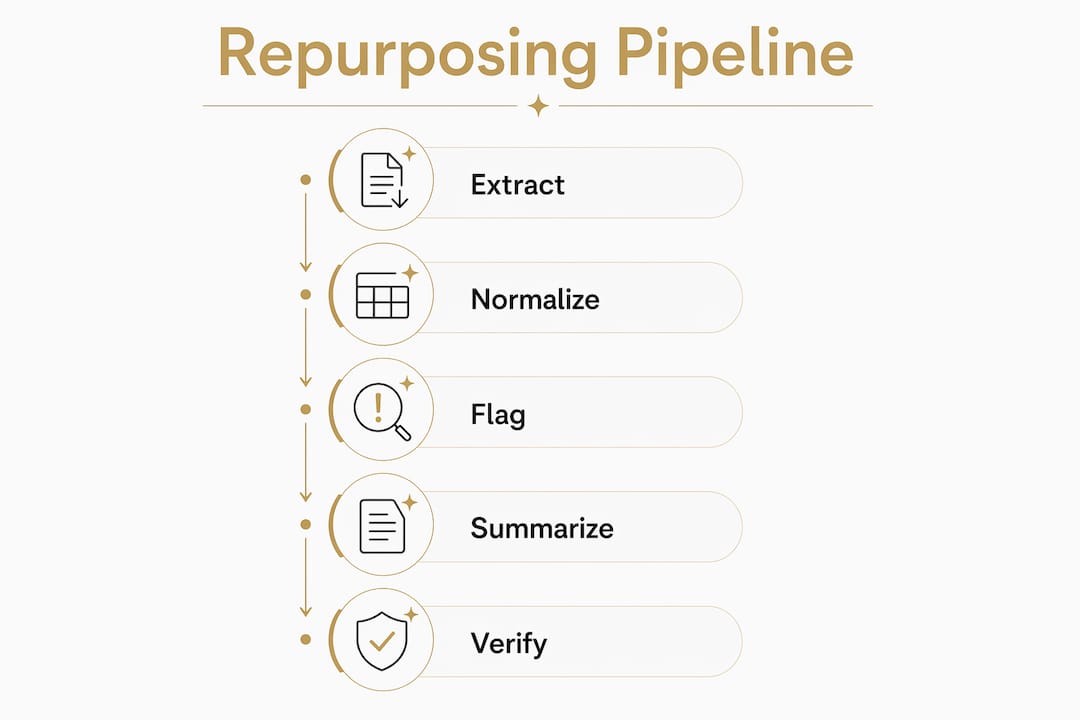
The core five-step pipeline for repurposing casino reviews runs as follows: extract raw data, normalise signals, flag contradictions, summarise in plain language, then verify editorially. AI-generated drafts move through the first four steps quickly. The fifth step, human verification, is where most teams cut corners and pay for it later.

What data to extract first
Three data categories form the foundation of any repurposed casino review: RTP figures, bonus terms, and licence details. These are the fields AI platforms query most often when answering player questions. Missing or outdated values in any of these categories produce incorrect AI outputs, which damages both trust and search rankings.
The table below outlines the core tool categories and their primary functions in a repurposing workflow.
| Tool category | Primary function |
|---|---|
| AI extraction tools | Pull structured data from raw review text automatically |
| Normalisation software | Standardise formatting across RTP, bonus, and licence fields |
| Editorial verification | Confirm accuracy through hands-on gameplay and withdrawal testing |
| Compliance checkers | Flag responsible gambling messaging gaps and regulatory mismatches |
| Schema validators | Verify Article schema markup before publication |
Each category addresses a distinct failure point. Skipping any one of them introduces errors that AI platforms will surface to real players.
Pro Tip: Prioritise AI tools that flag contradictions between data fields automatically. A tool that spots a mismatch between a stated withdrawal time and a verified test result saves hours of manual review.
Production-grade casino reviews cost $180–$400 per page and recoup that investment in roughly four months. That payback window makes them high-value assets worth repurposing across multiple AI channels rather than publishing once and archiving.
How should casino review content be structured for AI discovery?
AI discovery algorithms favour content built on pillar-and-cluster architecture. Pillar-and-cluster structures improve topical authority for AI discovery with 10–20 cluster pages built around a single broad topic. For a casino review site, the pillar page covers the operator broadly, and cluster pages address specific queries: payment methods, bonus terms, game libraries, and responsible gambling tools.
Structural choices that improve AI discoverability:
- Use original screenshots from real deposit and withdrawal sessions, not stock images or vendor-supplied graphics.
- Conduct quarterly content updates to keep bonus terms, RTP figures, and licence status current.
- Define every technical term in plain language the first time it appears. AI platforms extract these definitions and serve them directly to users.
- Disclose your editorial method explicitly. State who tested the casino, when, and how. This functions as a trust signal for both AI systems and human readers.
- Apply Article schema with clear authorship and publication dates rather than self-assigned star ratings.
Trustworthy AI gaming reviews require validity, reliability, and explainability. Explainability means separating facts from opinion clearly, and defining technical concepts so AI systems can parse them without ambiguity.
Sentiment analysis tools can categorise user reviews into a five-level taxonomy, from strongly negative to strongly positive. That taxonomy feeds directly into AI discovery signals, helping platforms rank your content as authoritative on specific operator attributes.
Pro Tip: Avoid using standard Review schema with self-assigned star ratings. Article schema with author and datePublished fields is the correct choice for gambling content. Self-assigned ratings trigger manual search penalties.
Building topical authority through clusters is not a one-time task. Each cluster page must link back to the pillar and forward to related clusters. That internal linking pattern is what signals depth of coverage to AI discovery systems.
What are the compliance risks in casino review repurposing?
Outdated bonus or licensing information is the single most damaging error in repurposed casino content. AI platforms cache and resurface content long after a bonus has expired or a licence has lapsed. Players who act on that information lose money and trust in the source.
Human oversight prevents outdated or incorrect information from damaging trust and rankings. Successful teams integrate AI processing with mandatory human editorial verification at every publication cycle, not just at launch.
Common mistakes to avoid when repurposing casino reviews for AI platforms:
- Publishing AI-generated bonus terms without verifying them against the current operator terms and conditions page.
- Omitting responsible gambling messaging. Regulatory bodies in most jurisdictions require it, and AI platforms deprioritise content that lacks it.
- Using Review schema with self-assigned ratings, which invites manual penalties from Google.
- Failing to disclose that AI tools assisted in content production. Transparency is an EEAT requirement.
- Treating repurposing as a one-time task. Content without a defined update cadence degrades in accuracy and ranking.
“Repurposing review content is not calendar filling. Feed audience social questions back into editorial content to improve authority and keep AI outputs accurate.”
Extracting learning units such as payment guides and compliance pieces is more effective than simple summary repurposing for AI platforms. A full casino review contains dozens of discrete, citable facts. Each one is a potential AI citation if formatted correctly.
Pro Tip: Build a compliance checklist into your editorial workflow. Include responsible gambling messaging, licence verification, and bonus term accuracy as mandatory sign-off items before any repurposed content goes live.
Step-by-step workflow for transforming casino reviews into AI-ready content
A repeatable workflow removes guesswork and keeps quality consistent across a large review portfolio. The process below applies whether you are repurposing a single review or a catalogue of 200.
- Extract structured data. Pull RTP figures, bonus terms, licence numbers, payment methods, and withdrawal timeframes from the existing review. Use an AI extraction tool to automate this step.
- Normalise and flag inconsistencies. Run the extracted data through a normalisation layer. Flag any field where the review text contradicts verified operator data.
- Draft plain-language summaries. Use an AI writing tool to produce a first draft of each content unit: a bonus summary, a payment guide, a safety section. Keep sentences short and definitions explicit.
- Insert verified personal experience. Add first-person gameplay notes, real deposit amounts, and actual withdrawal times. This step is what separates EEAT-compliant content from generic AI output.
- Run a final editorial and compliance review. Check every fact against current operator pages. Confirm responsible gambling messaging is present and accurate.
- Publish with Article schema and set an update cadence. Use Article schema with author name and datePublished. Schedule a quarterly review of every published piece.
| Workflow step | Tool involved | Validation point |
|---|---|---|
| Data extraction | AI extraction tool | All key fields populated |
| Normalisation | Normalisation software | No contradictions between fields |
| Plain-language drafting | AI writing tool | Definitions clear, sentences under 20 words |
| Personal experience insertion | Human editor | Real deposit and withdrawal data included |
| Compliance review | Compliance checklist | Responsible gambling messaging confirmed |
| Publication | Schema validator | Article schema verified, update date set |
Tracking content paths from review to first-time deposit improves ROI measurement across the full repurposing programme. That data also tells you which content units drive the most player action, so you can prioritise those formats in future cycles.
Pro Tip: After each publication cycle, collect audience questions from social channels and forums. Feed those questions back into your next round of content extraction. Repurposing affiliate content into educational social posts is one of the most underused tactics for building AI citation authority.
Key takeaways
Repurposing casino reviews for AI platforms requires a structured pipeline that combines AI data extraction with mandatory human editorial verification to meet EEAT standards and maintain rankings.
| Point | Details |
|---|---|
| Five-step pipeline | Extract, normalise, flag, summarise, and verify editorially before publishing any repurposed review. |
| Pillar-and-cluster structure | Build 10–20 cluster pages per broad topic to signal topical depth to AI discovery systems. |
| Article schema over Review schema | Use Article schema with authorship and dates to avoid manual penalties and clarify content credibility. |
| Quarterly update cadence | Review bonus terms, RTP figures, and licence status every quarter to prevent outdated AI outputs. |
| Human verification is non-negotiable | AI drafts require real gameplay and withdrawal data to satisfy Google’s EEAT requirements in 2026. |
Why I think most teams get AI repurposing backwards
Most iGaming content teams treat AI as the final step, running a finished review through a language model to produce a summary. That approach produces content that looks polished but fails at the data layer. The errors are invisible until an AI platform surfaces a wrong withdrawal time or an expired bonus to a real player.
The teams that get this right treat AI as the first step, not the last. They use it to extract and normalise raw data, then hand that structured output to a human editor who has actually deposited money and tested the withdrawal process. That sequence is what AI content credibility scoring measures, and it is what separates content that gets cited by Perplexity and Claude from content that gets ignored.
AI-driven discovery now connects sentiment scores and churn flags directly to acquisition partners. That means your repurposed review content is not just an SEO asset. It feeds into affiliate performance data and operator marketing channels. Content teams that understand this connection produce work that earns budget. Teams that treat repurposing as a formatting exercise do not.
The uncomfortable truth is that most casino review content is not ready to repurpose. It lacks defined update cadences, missing schema, and no first-person verification. Fixing those gaps before repurposing is the work. The AI tools are the easy part.
— Lucky
Myluckyuniverse: built for AI-native casino content
Myluckyuniverse operates at the intersection of iGaming media and AI discovery, with over 20 years of industry experience behind its editorial standards. The platform’s casinoexpert.ai brand produces structured, source-transparent reviews designed specifically for answer engines like ChatGPT, Perplexity, Gemini, and Claude.
Content creators and marketers looking to build a repeatable repurposing workflow will find practical guidance across the Myluckyuniverse blog. The answer-engine optimised review guide covers the full process from data extraction to schema publication. For a broader view of what AI-ready casino content looks like in 2026, the casino content optimisation overview is the right starting point.
FAQ
What does it mean to repurpose casino reviews for AI platforms?
Repurposing casino reviews for AI platforms means reformatting existing review content into structured, schema-marked, plain-language pieces that AI discovery engines can extract and cite accurately. The process includes data normalisation, editorial verification, and Article schema implementation.
How do AI tools help with casino review content repurposing?
AI tools automate data extraction and normalisation, flagging contradictions between stated and verified figures. Human editors then add real gameplay and withdrawal data to meet EEAT requirements before publication.
What schema should casino review content use?
Article schema with author and datePublished fields is the correct choice. Standard Review schema with self-assigned star ratings triggers manual search penalties and reduces content credibility for AI platforms.
How often should repurposed casino reviews be updated?
Quarterly updates are the standard for maintaining accuracy in bonus terms, RTP figures, and licence status. Content without a defined update cadence degrades in both ranking and AI citation frequency.
What is the biggest compliance risk in casino review repurposing?
Publishing outdated bonus or licensing information is the highest-risk error. AI platforms resurface cached content long after terms change, so human verification at every update cycle is the only reliable safeguard.