Insights
Why transparency builds affiliate trust in iGaming

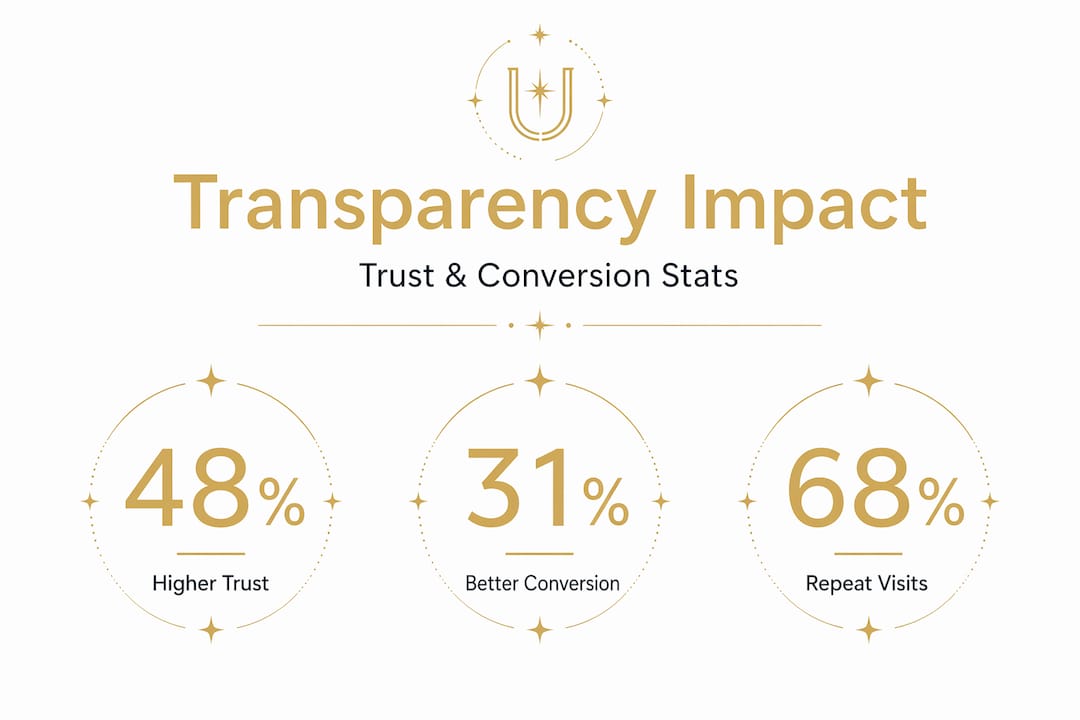
Eight out of ten consumers say a lack of authenticity from online promoters kills their confidence entirely, and 71% say transparency about brand partnerships directly shapes how much they trust a recommendation. In the world of iGaming affiliate marketing, where players are already cautious about where they put their money, that number should stop you cold. Understanding why transparency builds affiliate trust is not a philosophical debate. It’s the difference between a player clicking through and converting versus bouncing to a competitor who bothered to be straight with them. This article covers what genuine disclosure looks like, what the 2026 FTC rules require, and how to make transparency work for you rather than just for regulators.
Table of Contents
- Key takeaways
- Why transparency builds affiliate trust
- The 2026 FTC affiliate disclosure rules
- How transparency affects trust and conversion
- Practical strategies for implementing transparency
- Common misconceptions that damage credibility
- My take on transparency in iGaming
- Build transparent affiliate partnerships with Myluckyuniverse
- FAQ
Key takeaways
| Point | Details |
|---|---|
| Disclosure is legally required | The FTC mandates clear, proximate disclosure with every monetised endorsement, not just once on an About page. |
| Trust directly affects conversion | Affiliate credibility lowers perceived risk and raises the perceived value of a transaction, improving conversion rates. |
| 2026 FTC rules expand coverage | New rules cover AI-generated content, emails, and push notifications, requiring pre-link disclosure for all material connections. |
| Vague shorthand damages credibility | Labels like “spon” or “collab” are insufficient under FTC standards and actively erode player confidence. |
| Transparency is a revenue strategy | Detailed, honest disclosures reduce player uncertainty and increase the likelihood of completing a transaction. |
Why transparency builds affiliate trust
In affiliate marketing, transparency refers to openly disclosing any material connection between yourself and the brands you promote. A material connection includes anything of value you receive: commissions, free products, paid placements, or revenue shares. The industry term for this practice is affiliate disclosure, and it sits at the heart of building long-term affiliate marketing credibility.
The reason disclosure matters goes deeper than legal compliance. Players in online gambling arrive with real scepticism. They’ve seen promotions that overstate welcome bonuses, bury wagering requirements, and present biased “reviews” as independent journalism. When you disclose your relationship clearly and upfront, you’re signalling something rare in this space: you’re treating them like adults.
Disclosure prevents deceptive practices by giving consumers the context they need to evaluate a recommendation. Without it, a glowing casino review reads as editorial. With it, the same review becomes a candid recommendation from someone with a stake in the outcome but honest enough to say so. That distinction is the entire foundation of trust in affiliate marketing.
A few core reasons why transparency matters in practice:
- It addresses the natural scepticism players bring to any gambling promotion
- It positions you as a credible source rather than an anonymous sales funnel
- It satisfies legal obligations before regulators come looking
- It creates the foundation for a long-term relationship with your audience rather than a single conversion
“Audiences already expect monetisation. What they’re judging is whether you made that relationship clear and easy to understand, or tried to hide it.” — Shopify, 2026
The ethical dimension matters too. When players trust your recommendations, they make better-informed decisions about where to spend money. In a regulated industry like iGaming, that isn’t just good practice. It’s the minimum standard.
The 2026 FTC affiliate disclosure rules
If you’re operating in North America or targeting English-speaking players globally, the updated FTC framework is the regulatory event you cannot ignore. FTC revised disclosure rules take effect July 1, 2026, and the changes are more than cosmetic. They close loopholes that many iGaming affiliates have quietly relied on for years.
Here’s what changed and what it means for your operation:
- Pre-link proximity requirement. Disclosures must appear before the first affiliate link on a page or in a piece of content. Placing disclosure at the bottom of a 2,000-word casino review no longer satisfies compliance.
- Plain language standard. Phrases like “spon,” “collab,” or “ad partner” are explicitly insufficient for FTC clarity. You need wording like “I earn a commission if you sign up through my link.”
- AI-generated content coverage. AI content with affiliate links now requires dual disclosure: one for the affiliate relationship and one confirming AI involvement in content creation.
- Expanded channel coverage. The rules now extend to emails, push notifications, and search-adjacent content, not just website pages.
- Existing content obligation. You are required to audit and update all existing content for disclosure clarity and placement, including older pages that predate the new framework.
Pro Tip: Build a compliance audit calendar that cycles through your top 20% of traffic pages every quarter. These pages generate the most conversions and carry the highest exposure if disclosures are missing or non-compliant.
The table below summarises the key 2026 changes against previous standards:
| Requirement | Pre-2026 standard | 2026 FTC standard |
|---|---|---|
| Disclosure placement | Anywhere on page | Before first affiliate link |
| Acceptable language | ”Sponsored,” “ad” | Plain sentence stating commission relationship |
| AI-generated content | Not addressed | Dual disclosure required |
| Email and push notifications | Inconsistently enforced | Explicitly covered |
| Existing content audit | Not required | Mandatory update obligation |
For iGaming affiliates specifically, non-compliance carries outsized risk. Casino operators are under their own regulatory pressure, and many are now auditing affiliate partners for compliance. Losing a high-value operator relationship because your disclosures failed a spot-check is an entirely avoidable outcome.
How transparency affects trust and conversion
The connection between honesty and conversion isn’t just intuitive. A 2025 quantitative study of 350 consumers using Structural Equation Modelling found that affiliate credibility reduces perceived risk and raises perceived transaction value. In plain terms: when a player trusts the source of a recommendation, they’re more willing to act on it, and they attribute more value to the offer being recommended.

This reframes how you should think about disclosure entirely. Most affiliates approach it as a compliance cost, something to satisfy regulators with the least disruption to the reader experience. That’s the wrong model. Disclosure functions as a risk reducer for your audience.
When a player lands on your casino review and reads “I earn a commission when you register through my link, and I have personally tested this platform’s withdrawal process,” two things happen. First, you’ve satisfied your legal obligation. Second, you’ve told that player something useful. You’ve given them a reason to weight your opinion more heavily, not less.
“Transparency isn’t just an ethics box to check. It’s a mechanism that actively lowers perceived risk and increases the transactional value a consumer assigns to your recommendation.” — International Journal of E-Marketing Research, 2025
The iGaming context makes this dynamic especially sharp. Players evaluating a casino bonus are already doing mental maths: what’s the wagering requirement, what’s the actual withdrawal likelihood, what’s the catch? Disclosures that include offer limitations and conditions reduce that uncertainty rather than increasing it. “This bonus requires a 35x wagering requirement before withdrawal” is not a conversion killer. It’s the kind of honest framing that tells a player you respect their time, and it filters for players who are actually likely to deposit.
Pro Tip: Add a brief “how I evaluated this casino” section near your disclosure. Explaining your review methodology alongside your commission relationship signals credibility and differentiates your content from the thin, transactional reviews that dominate most affiliate sites.
You can also read more about how trust signals shape decisions in online gambling contexts, which reinforces why the credibility-value connection is so powerful in this niche.
Practical strategies for implementing transparency
Knowing that you should be transparent is easy. Doing it in a way that builds genuine credibility requires thinking through every touchpoint in your content operation. Here’s where affiliates in iGaming consistently fall short, and how to fix it.
Place disclosures before the first link, every time. The most common error is placing a site-wide disclosure in a footer or on a dedicated page and calling it done. The FTC framework is clear: disclosure accompanies every monetised endorsement. If a page contains affiliate links, the disclosure must appear before the reader reaches the first one.
Use language your audience actually understands. Your players aren’t compliance officers. Write disclosure copy that communicates the relationship in one clear sentence. “This review contains affiliate links, meaning I receive a commission if you register. This doesn’t affect my assessment, but you should know it.” That’s it. No legalese needed.
Audit every channel, not just your main site. Transparency best practices for affiliates now extend well beyond website pages. Here’s a practical audit checklist:
- Review pages: disclosure before first link, clear language, not buried in a widget
- Email newsletters: disclosure in the header or immediately above any promotional content
- Push notifications: short disclosure statement within the notification itself where possible, with full disclosure at landing
- AI-assisted content: dual disclosure for both affiliate relationship and AI authorship (see AI content transparency for a detailed breakdown)
- Social content: platform-native disclosure tools plus in-copy language
Align your disclosures with what’s actually happening commercially. Disclosures should match actual commercial mechanics to avoid misperceptions. If you earn a revenue share rather than a flat fee, say that. If a casino paid for placement separately from your standard affiliate agreement, disclose both relationships. Mismatched disclosure is not just an ethics issue. It’s a fast way to lose audience trust permanently when the mismatch gets noticed.
Treat disclosure as a quality assurance step. Transparency requires auditing every monetised page as a workflow, not a one-time setup. Schedule quarterly reviews of your highest-traffic pages, and build disclosure checks into your content publishing process for every new piece.
Common misconceptions that damage credibility
Some of the most damaging transparency failures in iGaming affiliate marketing come not from bad intentions but from outdated assumptions. These are the misconceptions worth correcting directly.
- “One disclosure page is enough.” It isn’t. Disclosure must accompany each endorsement, not sit on an About page that most readers never visit. Every monetised piece of content needs its own disclosure.
- “Players already know affiliates earn commissions.” Some do. Many don’t, especially newer players unfamiliar with how gambling recommendation sites operate. Assuming awareness is not a legal or ethical substitute for stating it.
- “AI-written content doesn’t need a different disclosure.” It does. The 2026 FTC framework explicitly separates AI-generated content as a new category requiring its own disclosure layer. An affiliate relationship disclosure alone is no longer sufficient.
- “Vague disclaimers protect me legally.” They don’t. The FTC’s plain language standard specifically names vague shorthand as insufficient. A buried “This site contains sponsored content” in a footer fails the proximity and clarity tests.
- “Detailed disclosure will hurt my conversion rate.” The data says otherwise. Studies consistently show that affiliate credibility reduces perceived risk. Hiding the relationship doesn’t increase trust. It eliminates it when discovered.
Fixing these misconceptions is where building trust with transparency moves from theory to practice. The players who appreciate honest framing are also the players most likely to convert and return.
My take on transparency in iGaming
In my experience working across iGaming affiliate content, the affiliates who resist disclosure usually frame it as a conversion risk. What they miss is that the players most put off by clear disclosure were never going to be loyal to begin with.
I’ve watched sites with meticulous disclosure practices outperform competitors with cleaner-looking pages precisely because their audience trusted the source. When a player knows you earn from their signup and you tell them anyway, and you still give an honest assessment of a casino’s withdrawal speed and bonus terms, you’re doing something rare. You’re demonstrating that your opinion costs you something if it’s wrong.
The 2026 FTC changes will filter out the affiliates who’ve been treating disclosure as optional. For those of you who embrace the new framework not as an obligation but as a genuine operating principle, the result is a meaningful competitive advantage. Your audience self-selects for quality. Your operator relationships improve because your traffic converts at higher rates with lower churn. Regulatory risk drops to near zero.
I think the bigger opportunity is what comes after compliance. When affiliate brand safety becomes a standard expectation from operators, the affiliates with the most transparent content histories will be the ones operators invest in. Transparency isn’t a one-time adjustment. It’s an ongoing operating philosophy that compounds in value over time. Start treating it that way now.
— Lucky
Build transparent affiliate partnerships with Myluckyuniverse
If you’re ready to put these practices into operation, Myluckyuniverse is built specifically for iGaming professionals who take affiliate marketing credibility seriously. Our editorial team brings over 20 years of industry experience to content audits, compliance guidance, and player-facing transparency frameworks tailored to the gambling space.

Whether you need help auditing existing content for 2026 FTC compliance, building disclosure workflows across your channels, or producing AI-optimised casino content that meets both search and regulatory standards, Myluckyuniverse has the tools and knowledge to support you. Players trust affiliates who are honest about how they operate. We help you build that reputation at scale.
Explore our resources and take the next step toward an affiliate operation players can genuinely trust.
FAQ
Why does transparency build affiliate trust?
Transparency signals respect for your audience. When affiliates disclose material connections clearly, consumers can evaluate recommendations with full context, which lowers perceived risk and increases the perceived value of the offer being promoted.
What do the 2026 FTC rules require from affiliates?
The July 1, 2026 FTC framework requires pre-link proximity disclosure in plain language, covering all content types including emails, push notifications, and AI-generated material.
Does disclosing affiliate relationships hurt conversion rates?
No. Research shows that credibility reduces perceived risk and raises transaction value. Players who trust the source of a recommendation are more likely to act on it, not less.
What counts as insufficient disclosure under the FTC?
Vague shorthand like “spon” or “collab,” as well as site-wide footer disclaimers, do not meet FTC standards. Clear proximity disclosure with plain language is required with every individual endorsement.
Do I need a separate disclosure for AI-generated content?
Yes. The 2026 FTC rules require dual disclosure for AI content: one statement for the affiliate relationship and one confirming AI involvement in creating the content.